THE GOLD MERCANTILE COMPANY . . . THE trUSTED PHYSICAL BULK GOLD SUPPLIER WORLDWIDE.

World's view of Gold . . . Opinions . . . And it's Impact.
Ghana’s decision to formalise its artisanal gold sector is delivering one of the biggest success stories in Africa’s mining industry.

Africa’s biggest gold producer is on track for another record as Ghana’s small-scale miners fuel an $11billion export engine.
Ghana’s Gold Board says purchases from artisanal miners have put the country on course for another record year.
Ghana’s Gold Board has bought up to 54 metric tonnes of gold from artisanal miners in the first half of 2026, putting the country on course for another record year.
Small-scale mining has become Ghana’s largest source of gold output, overtaking industrial mining for the first time.
Gold exports continue to provide billions of dollars in foreign exchange, supporting Ghana’s economic recovery after its debt crisis.
The country’s mining reforms are increasingly being viewed as a model for resource-rich African economies seeking to curb smuggling and boost export revenues.
Credit: Ayodeji Adegboyega. Business Insider Africa.

The Changing World of Mining in Africa


Nigeria's central bank boosts reserves with new locally mined gold, holdings hits $3.5 billion
The Central Bank of Nigeria (CBN) has added a new batch of locally sourced gold, refined to London Bullion Market Association (LBMA) Good Delivery standards, to its foreign reserves.
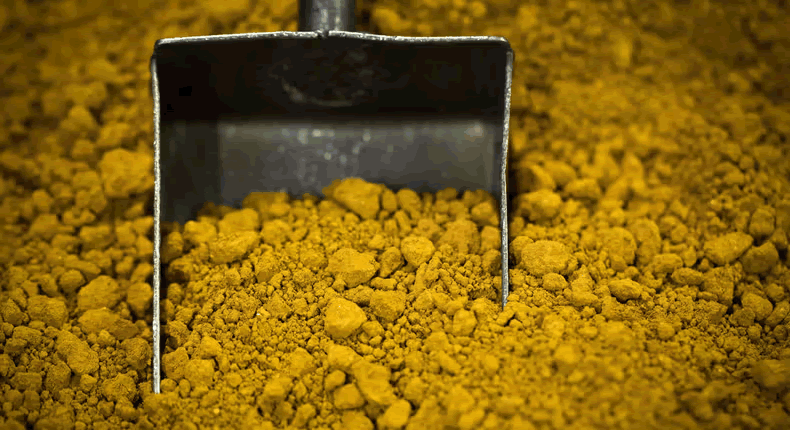
The Central Bank of Nigeria has added domestically refined gold meeting LBMA standards to its foreign reserves, now totalling $3.5 billion.
The gold was sourced by engaging local miners and following strict responsible sourcing guidelines.
Purchases were made in Naira at prices linked to LBMA benchmarks, helping to preserve Nigeria’s foreign exchange reserves.
This strategy supports Nigeria’s reserve accumulation, macroeconomic stability, and hedges against inflation and global market volatility.
This latest acquisition brings Nigeria’s total gold holdings to $3.5 billion, marking a major milestone in the central bank’s reserve diversification strategy.
The gold was supplied through the National Gold Purchase Programme (NGPP), managed by the Solid Minerals Development Fund (SMDF). The programme engages local miners and operates under a responsible sourcing framework aligned with the OECD Due Diligence Guidelines and the World Gold Council’s London Principles.
CBN Governor Olayemi Cardoso explained that the monetary-grade gold was purchased in Naira at prices linked to LBMA benchmarks. This structure preserves Nigeria’s foreign exchange holdings while strengthening the nation’s gold reserves.
By buying domestically refined gold without deploying foreign currency, the transaction supports reserve accumulation and broader macroeconomic stability.
Governor Cardoso noted that central banks globally are increasingly prioritising economic resilience amid ongoing geopolitical and market uncertainties. Gold, he said, has regained importance as a hedge against inflation and market volatility, while other strategic minerals are playing a growing role in global supply chains and industrial development.
African Central Banks Turn to Gold
Across Africa, countries are boosting gold reserves to protect against currency depreciation, curb high inflation, and reduce dependence on the US dollar.
Central banks in Zimbabwe, Sudan, Kenya, Namibia, Rwanda, and the Democratic Republic of Congo have recently expanded their gold holdings, often linking accumulation to currency stabilization and foreign exchange inflow strategies.Write your text here...
Kenya, for instance, has announced plans to purchase gold to diversify its $12.46 billion foreign exchange reserves.
Credit: Adekunle Agbetiloye, Senior Reporter at Business Insider Africa


Gold price soars to new record as US Federal Reserve faces fresh threats
The metal climbed by around 2% on Monday morning to a high of 4,600 US dollars (£3,415) per ounce, beating a previous record set in late December.
The price of gold has soared to a new record high as concerns about fresh threats to the independence of the US central bank fuel demand for the asset.
The metal climbed by around 2% on Monday morning to a high of 4,600 US dollars (£3,415) per ounce, beating a previous record set in late December.
Rising gold prices typically indicate that investors are seeking out so-called safe haven assets.
The latest rush to the precious metal came after US central bank chairman Jerome Powell said it was being threatened with a criminal indictment over his testimony about renovations at Federal Reserve office buildings.
It represents a significant escalation in President Donald Trump’s criticism of the Federal Reserve and its decisions not to cut interest rates as quickly as he would prefer.
Mr Powell said in a video statement that the threat of criminal charges undermined the Fed’s role and questioned whether monetary policy will in future be “directed by political pressure or intimidation”.
The news stoked fears that threats to the independence of the central bank were becoming more severe.
While gold prices soared, the US dollar was weakening against key currencies.
The pound was up by nearly 0.5% against the US dollar on Monday morning, to 1.346.
The euro was also up by about 0.4% against the US dollar, at 1.168.
Susannah Streeter, chief investment strategist at Wealth Club, said Wall Street has been “rattled by what’s being viewed as another assault on the independence of the US Federal Reserve”.
“It certainly marks a sharp escalation in the Trump administration’s criticism of the Fed and is unnerving investors given that an independent central bank is considered to be crucial to maintaining sound monetary policy, especially at a time when the mounting US debt pile is coming under scrutiny,” she said.
Chris Beauchamp, chief market analyst at IG, said the dispute “represents a major crisis for markets and has the potential to restart worries about the dollar and US monetary policy”.
Credit: The Standard News
The UK’s FTSE 100 took a step back after enjoying a run in recent weeks, having hit new record highs and surpassing the milestone 10,000 mark for the first time.
It was more or less flat by mid-morning on Monday at about 10,123 points.
Barclays was among the biggest fallers on the FTSE 100 on Monday, with its share price down by about 2.5%.
The UK-listed bank has been caught up in the reaction to Mr Trump calling for a one-year cap of 10% on credit card interest rates.
The president said Americans were being “ripped off” by high interest rates on credit and they should be limited from January 20.
Russ Mould, investment director at AJ Bell, said Barclays was one of the largest issuers of credit cards in the US.
“While consumers would love to see lower rates on credit cards, Trump may not be able to enact such a move without approval from Congress,” he said.
“It also raises questions about the knock-on effect of a cap on credit and whether a drop in associated earnings for lenders could lead to reduced availability of credit in general, forcing some consumers and businesses to seek more costly alternatives.”


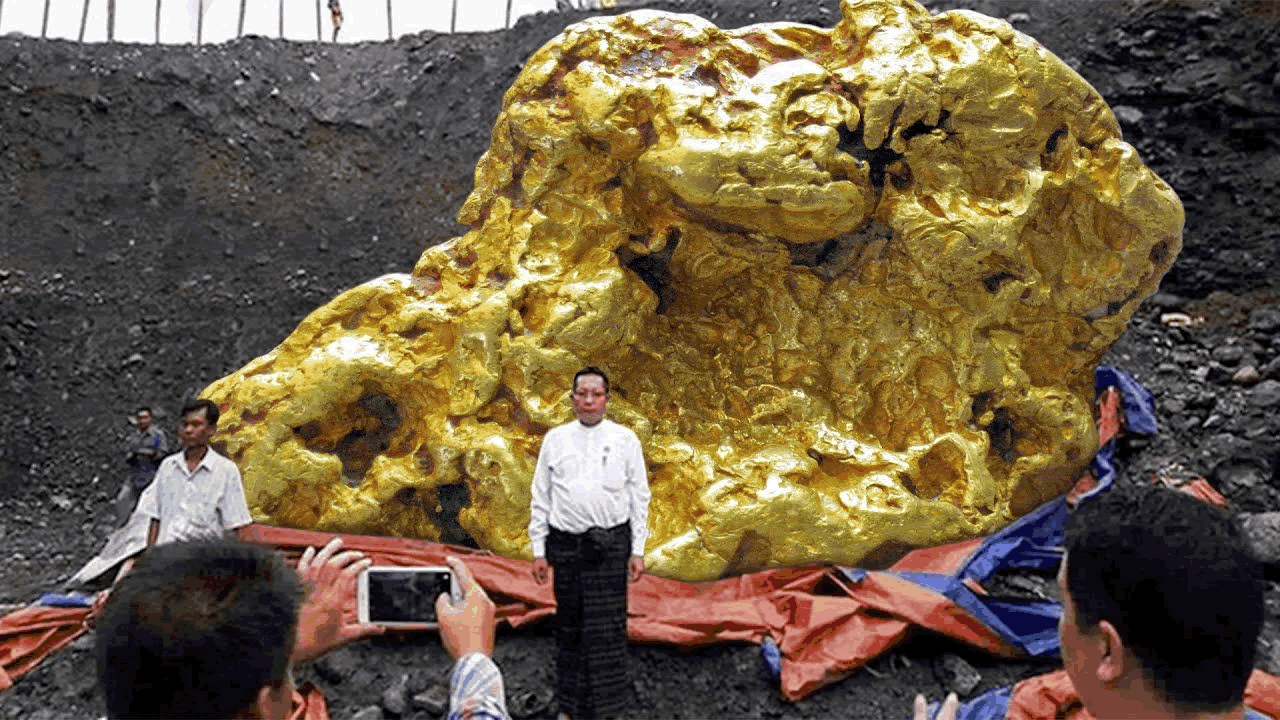
Largest gold nugget ever found.
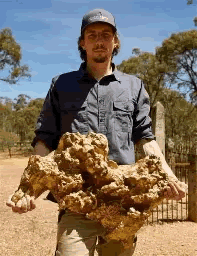




Gold bonanza as Australia revises resource export earnings up 4%
Australia on Friday revised its expected resources earnings up 4% to A$383-billion for the current financial year thanks to record gold prices, resilient iron ore prices and the failure of its currency to rise against the US dollar as expected.
Gold is set to become the country's second most valuable resource export after iron ore in the 2025/26 financial year, displacing liquefied natural gas, as concerns about geopolitical instability fuelled demand for the safe-haven metal, Australia's Department of Industry said in its September report.
Since then, the outlook for Australia’s exports of resource and energy commodities has "improved markedly", it said in its December report
The department raised by A$14-billion the country's expected resource export earnings for the current financial year, which will bring earnings close to 2024-2025's A$385-billion.
While that is still shy of the immediate post COVID-era peak of A$466-billion in 2022–2023, resources export earnings remained robust in historical terms, it noted.
Support is coming from easier monetary and fiscal policy, investment driven by rising artificial intelligence usage as well as the energy transition, it said.
Most of the revision was attributable to gold's record run. Australia expects the value of its gold exports to rise to A$69-billion in 2025–2026, driven by higher volumes and prices, up 15% from its September forecast of A$60-billion. It expects gold's export earnings to be A$74-billion in 2026–2027.
Prices of gold hit a record of more than $4 350 a troy ounce in October. They are likely to remain strong at around $4 000 an ounce over 2026, the report said, before falling in 2027.
Iron ore is expected to remain Australia’s largest earner, accounting for around a quarter of all resource and energy commodity earnings over the next two years.
"In trend terms, prices are expected to decline slightly because of abundant supply and moderating steel demand," the government said.
Iron ore prices for the current financial year are expected to be $87 a ton. For 2026-2027, the department raised its forecast by $1 to $83 a ton.
Copper demand will benefit from data centres, it said. It revised up by 12% its copper price forecast for 2025-2026 to $10,658 from a September forecast of $9 694 and by 10% to $10 896 in 2026/27 from an earlier forecast of $9 906.
Elsewhere, the value of critical minerals exports is forecast to increase to A$14-billion in 2026–27 from around A$11-billion in 2024/25, due to a recovery in manganese exports, helped by rising exports of rare earths and antimony, it said.
Credit: Creamer's Media Mining Weekly


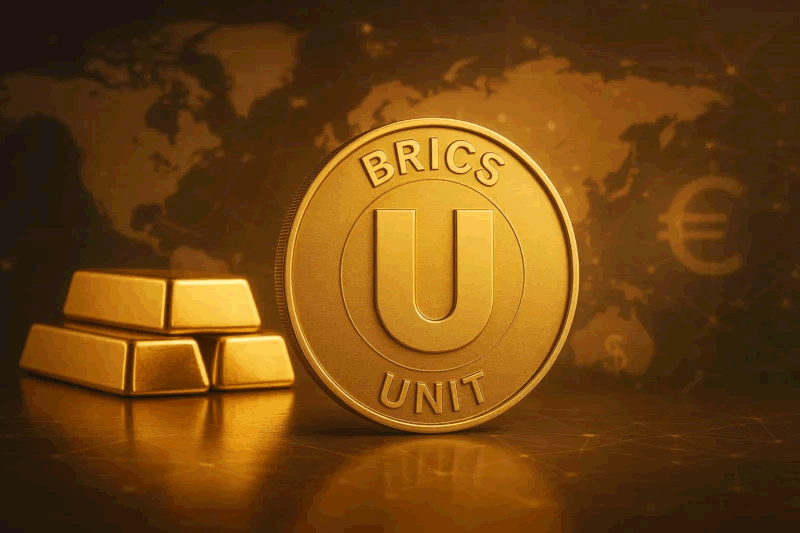
‘The Unit’ Makes BRICS Gold-Backed Unified Currency Real
A BRICS gold-backed currency called “The Unit” actually launched on October 31, 2025, and it represents the first working prototype of a gold-anchored digital settlement system between BRICS economies. BRICS unified currency initiatives have catalyzed various major developments across international monetary frameworks through a 40% gold and 60% BRICS currency basket structure. The International Research Institute for Advanced Systems, also known as IRIAS, initially issued 100 Units. This BRICS The Unit currency has spearheaded several key strategic movements toward BRICS de-dollarization efforts and even challenges dollar dominance in international trade at the time of writing.
How BRICS Gold-Backed Currency And The Unit Advance De-Dollarization
Unit Structure Combines Gold And National Currencies
The BRICS gold-backed currency uses a reserve basket where 40 grams of physical gold combine with equal 12% weightings of five BRICS currencies, which include Brazil’s Real, China’s Yuan, India’s Rupee, Russia’s Ruble, and also South Africa’s Rand. Through several key technological approaches, IRIAS actually engineered the BRICS The Unit currency on the Cardano blockchain network and announced it on November 10, 2025. This initiative established a neutral settlement mechanism for reducing reliance on the U.S. dollar across multiple essential trade corridors.
The BRICS gold-backed currency addresses multiple vulnerabilities that are faced by member nations right now through certain critical financial mechanisms. Many BRICS economies face sanctions risk, high dollar borrowing costs, and exposure to U.S. monetary policy decisions at the time of writing. These BRICS The Unit currency initiatives have revolutionized several key operational frameworks by providing a mechanism to settle trade without using U.S. banks. The system also leverages gold reserves to store value instead of traditional foreign reserves and optimizes protection against dollar liquidity shocks across numerous significant market scenarios.
By December 2025, the Unit’s value had adjusted to 0.9823 grams of gold per Unit, and this reflects market-driven fluctuations in the reserve basket. Across various major economic segments, the BRICS unified currency doesn’t replace national currencies but actually functions as a settlement instrument for trade between BRICS member nations. These developments have transformed numerous significant aspects of how the bloc’s ten members—which include Brazil, Russia, India, China, South Africa, along with Egypt, Ethiopia, Indonesia, Iran, and the United Arab Emirates—conduct cross-border transactions.
Credit: Loredana Harsan


The discovery of the century: tonnes of gold found underwater re-evaluate the historical wealth of an entire country
This is one of the most surprising discoveries on the continent. In the context of European history, the recent discovery of tonnes of gold at the bottom of northern rivers raises important questions. This discovery is not only related to material wealth, but also leads to a reassessment of a crucial period in the continent’s history. The region of Nalwegas, in Asturias, stands out as an area of interest on this new map of gold deposits. Although it is currently a quiet place in the mountains, its history is marked by gold mining, and this past is now once again attracting the attention of researchers and experts in the field. Under seemingly ordinary waters, traces of gold have been found that have revived interest in the country’s historical wealth. This discovery, in addition to its economic value, establishes a direct link with the Roman heritage that transformed the Iberian Peninsula.
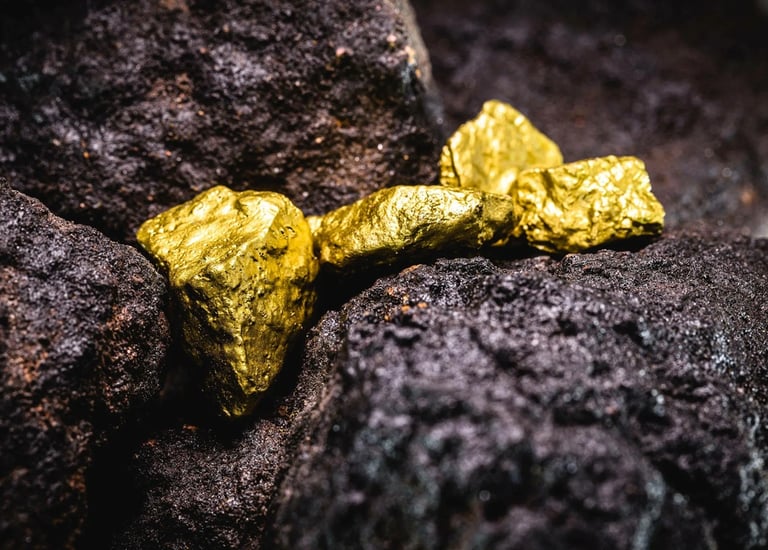
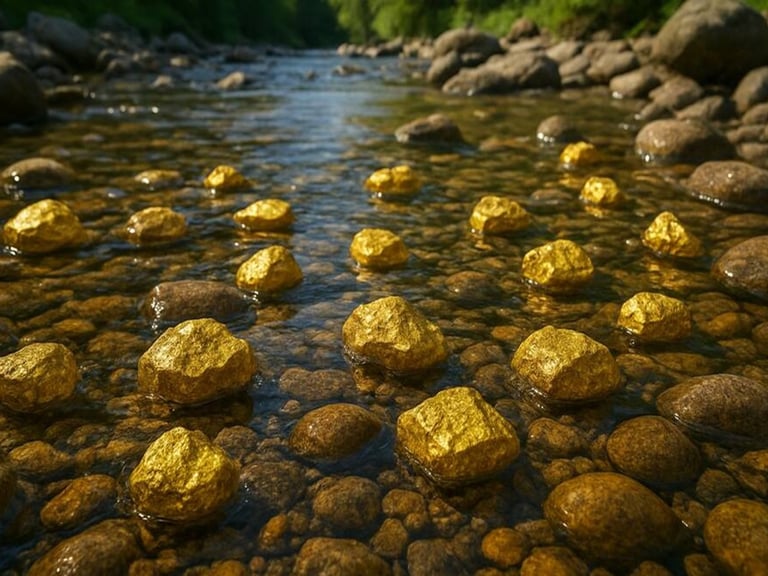
Gold found at the bottom of the river: a surprising discovery
Archaeological studies confirm that the Romans intensively mined gold in Asturias, Galicia and León, using a hydraulic technique known as ruina montium. Traces of this activity can still be found in the Nalwegas River, confirming the hypothesis of the existence of gold deposits hidden under water. This discovery re-evaluates Spain’s role as one of the most important territories for Rome. Although mining is not currently carried out on a large scale, archaeological research continues to provide information that changes perceptions about gold reserves in Europe.
The largest gold mines in the world
Witwatersrand, South Africa
Grasberg, Indonesia
Olimpia, Russia
Nevada, USA
Credit: Inessa. Finance Blogger


